
If you're part of any entrepreneurial or professional community, you've heard it a thousand times. "You need to position yourself." "Work on your positioning." "Your positioning isn't clear."
The problem is that almost none of the people using it can explain what it means. Or rather: everyone uses it with a different meaning, often the wrong one. And when a word means everything, it ends up meaning nothing.
In thirty years of marketing work I've seen this confusion cost many entrepreneurs and professionals dearly. Not because they weren't good — often they were excellent at their work. But because no one had explained what positioning really is, and above all how it's built.
Let's try to do that here.
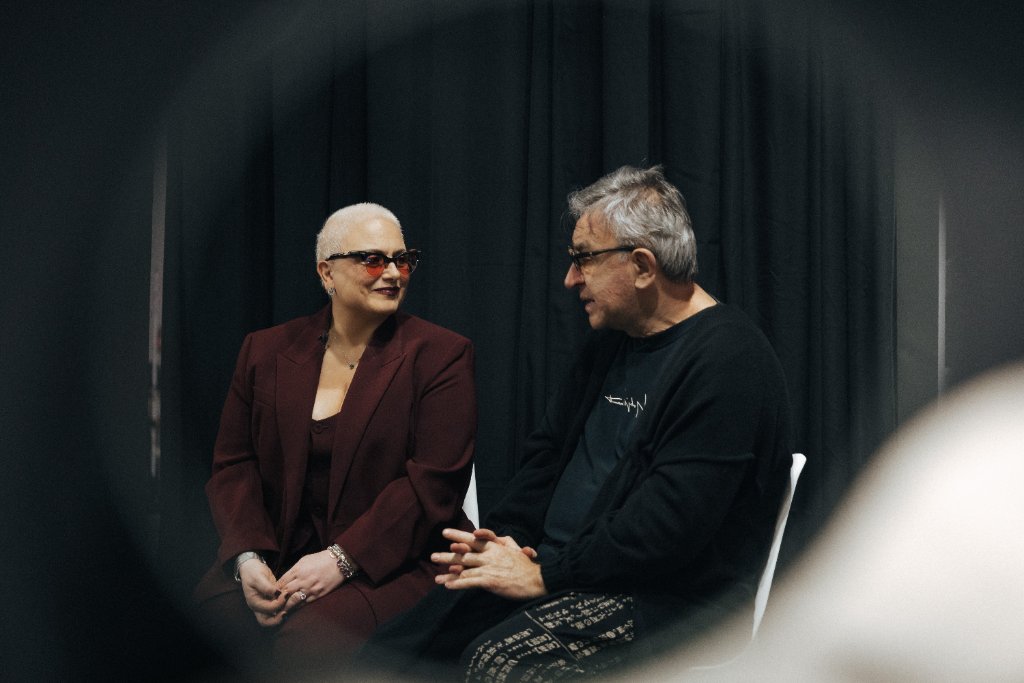 A candid shot taken during the interview with Dante Caretti at Mido 2026, discussing "against the current" marketing positioning choices. - full interview on Optics&Love
First of all: what positioning actually is
Let's start with the definition. The one I've used with my clients for years.
Marketing positioning is the perceptual space that our brand occupies in the minds of the people who make up our target market.
Note one thing: the definition talks about "perceptual space" and "minds". Not products, not prices, not logos. Positioning is not what you think you are. It's what people think you are.
This distinction is fundamental. Because it means that positioning is not something you decide alone. You build it — through what you communicate, what you do, the experience you offer. But the final result lives in your client's head, not yours.
Positioning is not what you think you are. It's what people think you are.
The most common mistake: confusing it with the logo
The misunderstanding I see most often is this: thinking that positioning is a matter of visual identity.
Change the logo. Redo the website. Update the colours. Hire a photographer and reshoot the profile photos. And then wonder why nothing changes.
These are communication tools. They matter — they communicate consistency, professionalism, care. But they're the outfit, not the person. Positioning is what lies beneath: who you are, who you're for, why someone should choose you instead of someone else.
A new logo doesn't answer any of these questions. Positioning does.
The three mistakes that block positioning
MISTAKE 1 — Trying to appeal to everyone Those who speak to everyone are no one's first choice. Positioning requires choosing — and choosing means giving something up.
MISTAKE 2 — Copying competitors If you look like everyone else, there's no reason to choose you. Positioning is built on difference, not similarity.
MISTAKE 3 — Expecting immediate results Positioning is built over time, with consistency and persistence. It's not a campaign. It's an ongoing process.
What truly builds positioning
In my experience, solid positioning rests on three elements that must be consistent with each other.
1 — The values you embody. Not the ones written on your 'about' page. The ones visible in how you work, how you treat clients, the choices you make when no one is watching.
2 — Coherence between who you are and what you sell. People buy from those they trust. Trust comes from consistency between the message and the real experience. When you say one thing and do another, positioning crumbles.
3 — Your target market. We attract those who resemble us. It's not a metaphor — it's a law of marketing. Defining who you're for also means defining who you are.
Positioning is always a shared thing
There's one aspect of positioning that's almost always underestimated: it's not something you decide in a strategy meeting and then "launch" onto the market.
Positioning is always the result of three elements meeting: what you communicate, the concrete experience you offer, and your client's personal experience. All three count. And none of the three can you fully control.
You can communicate your values perfectly, but if the experience the client lives doesn't confirm them, the positioning doesn't hold. You can offer an excellent service, but if you don't communicate it in the right way, no one will know.
This is why positioning is built over time, with consistency and persistence. It's not a result. It's a process.
Positioning is always shared: it's born from the meeting between what you communicate, the experience you offer and your client's personal history.
The question that changes everything
If I had to identify a single starting point for working on positioning, I'd say this: can you explain in one sentence what you do, who you do it for, and why someone should choose you?
Not a long sentence. Not a paragraph. One sentence.
If you can, you already have a positioning — perhaps to refine, but it's there. If you can't, or if the sentence changes every time you say it, that's where the work is.
This doesn't mean simplifying what you are. It means having clarity about what you are. And that clarity, in my experience, is the foundation of any marketing strategy that truly works.
Building positioning: where to start
Start with yourself. Before thinking about the market, competitors, communications: who are you? What are the values you'd never negotiate? What's your way of working that sets you apart, even when the product or service is similar to others'?
Choose your market. Don't 'target' an audience as if it were a bullseye to hit. Choose the people you want to work with, those for whom you're truly the right choice. And learn to recognise them.
Build coherence. Every touchpoint with the client — the website, social media, the way you respond to emails, your tone of voice, the service experience — must tell the same story. Not the same sentence. The same story.
Maintain it over time. Positioning isn't a campaign with a start and end date. It's the work of every day. And it's precisely this consistency — often underestimated — that makes it solid.